Is Shift Work a Cancer Risk According to IARC?
Short answer: IARC has classified night shift work that disrupts the body’s circadian rhythm as “probably carcinogenic to humans” (Group 2A). That is a warning about a possible hazard—not a finding that every person who works nights will get cancer, or a calculation of any one worker’s risk.
The classification is often compressed into a headline such as “night shifts cause cancer.” That skips the important details: what IARC evaluated, how strong the evidence was, and what the classification can—and cannot—tell us about an individual job. For anyone looking into shift work health, those details matter. They matter on a film set, too, where a night shoot can be planned as a short, clearly bounded block—or allowed to drift until the schedule itself becomes a safety problem.
What IARC’s 2007 classification means
In 2007, the International Agency for Research on Cancer (IARC), part of the World Health Organization, evaluated “shift work that involves circadian disruption.” The working group placed it in Group 2A: probably carcinogenic to humans. The assessment was later published in IARC Monographs Volume 98, in 2010.
The IARC 2007 classification identifies a potential cancer hazard. It does not measure how likely cancer is for a particular person, establish a safe number of night shifts, or prove that every form of shift work carries the same risk. Group 2A is a category describing the strength of evidence that an agent or exposure can cause cancer under some circumstances. It is not a ranking of how dangerous different exposures are in everyday life.
IARC’s review drew on limited evidence in humans, sufficient evidence in experimental animals, and mechanistic evidence relevant to circadian disruption. In the human studies available to the working group, night work was associated with some cancers, particularly breast cancer. But the evidence had limitations, including differences in how studies defined night work and how they accounted for other factors that can influence cancer risk.
Question What the classification says Is night shift work a confirmed cancer cause for every worker? No. “Probably carcinogenic” is not a prediction about any one person. Does Group 2A quantify an individual’s risk? No. It describes the strength of evidence for a hazard, not the size of personal risk. Does every overnight schedule create the same exposure? No. Timing, duration, frequency, light exposure, and recovery opportunities vary.How circadian disruption could matter
The circadian system helps coordinate sleep and wakefulness, hormone release, body temperature, and other biological processes across roughly 24 hours. Light is one of its strongest timing cues. Staying awake and exposed to light at night, then trying to sleep during daylight, can put a person’s work schedule at odds with that internal timing system.
That is the basic concern behind the phrase circadian disruption carcinogen. It describes the concern being evaluated—not a settled statement that circadian disruption has been shown to cause cancer in every exposed person. Researchers have examined possible pathways involving sleep and melatonin, changes to hormone rhythms, and other effects on biological regulation. These mechanisms help explain why the question is taken seriously, but they do not, by themselves, tell us how much risk any individual worker faces.
“Night shift” also covers a wide range of real schedules. A permanent overnight worker, a rotating hospital employee, and a crew member doing three consecutive night shoots are not necessarily exposed in the same way. The number of nights, the hours worked, recovery time, lighting, and whether shifts rotate rapidly or slowly can all differ. That complexity is one reason not to turn a hazard classification into a simple personal verdict.
Film nights: real night versus day-for-night
Film production offers a useful way to make the distinction between nighttime appearance and nighttime work. For much of cinema history, filmmakers often created a night look by shooting during the day and darkening or tinting the image in post-production or through in-camera techniques. This approach is known as day-for-night. In a classic setup, crews might shoot in daylight with underexposure and filtration, while actors, costumes, and lighting were arranged to suggest moonlight or darkness.
Day-for-night has never been one fixed recipe. The look depends on the stock or camera, the lens, exposure, filters, art direction, and the intended style of the scene. But the production logic is plain: a scene that appears to happen at night does not necessarily require the crew to work through the actual night. A director and cinematographer may choose a daytime exterior for creative, budget, access, or scheduling reasons.
Digital cameras and sensors expanded the image-making options. Modern sensors can capture detail in lower light than many older film workflows could, giving cinematographers more flexibility to work with practical sources, controlled darkness, and nuanced shadows. That has helped make “night” look more naturalistic in some productions, rather than like a daytime image simply darkened in post.
It would be a mistake, though, to treat improved low-light capability as a health solution. A camera’s ability to record a night aesthetic does not reduce the fatigue of a crew working at 3 a.m. Nor does a technically convincing day-for-night image mean every production can or should avoid night work. Location access, weather, performance, story, and money all shape the decision. The point is that the visual requirement and the work schedule are separate choices worth discussing early.
Schedule drift: the hours add up
On a production, “we’re on nights” can sound like a stable plan. In practice, the schedule may slide: a night block starts later than planned, a turnaround is shortened after a difficult location move, or a day call follows the final overnight wrap sooner than anyone expected. The call sheet tells only part of the story. What matters to a worker’s body is the actual sequence of work, sleep opportunity, commute, and recovery.
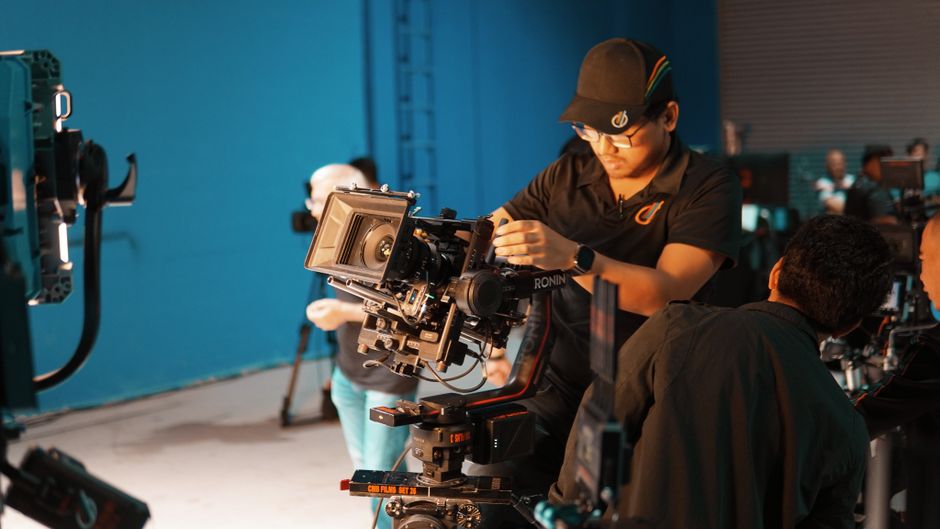
Count the hours. A crew member who wraps at 6 a.m., drives home, tries to sleep through daylight, and reports for another call that evening has not had a full day off just because the calendar changed. If the next call shifts earlier, the sleep window can shrink again. Over several nights, that drift can make it harder to maintain a consistent sleep routine and can compound fatigue-related risks on set and on the road.
This is not a claim that schedule drift has been proven to cause cancer. The IARC classification concerns night work involving circadian disruption broadly; it does not assign a cancer-risk score to one badly timed call sheet. But schedule design is a concrete, immediate part of worker health and safety. Fatigue can affect attention, reaction time, decision-making, and the ability to notice hazards—issues that matter around camera equipment, vehicles, rigging, and moving sets.
Turnaround is a safety protection, not a perk
Turnaround—the interval between the end of one work period and the start of the next—is often treated as a scheduling detail. It is also a practical protection for sleep opportunity, travel, meals, and basic recovery. A nominally adequate gap does not guarantee good sleep, especially when someone is switching between day and night schedules. But shrinking that gap makes recovery harder, not easier.
Production teams can make the schedule safer by treating night blocks as a defined plan instead of an open-ended experiment. That means tracking actual wrap and call times, protecting the agreed turnaround, and identifying schedule changes that create a day-to-night or night-to-day flip. If a shoot needs nights, crews should know the block’s expected duration and when the schedule will return to days.
Practical questions for a production meeting
- How many consecutive night calls are planned, and what are the actual expected start and wrap times?
- Is the turnaround protected after the last night, including after travel or a location move?
- Could a scene be achieved with day-for-night, controlled lighting, or another schedule option?
- Who is responsible for communicating a schedule change, and how will affected departments be notified?
- Are crew members expected to drive long distances after overnight work, and is there a safer transportation plan?
These questions should include the departments whose work can be squeezed when time runs short. Hair and makeup may be asked to report early to prepare talent before the camera call; electric and grip may need hours to rig or relight; the assistant director team may be balancing a moving schedule while trying to keep the set on time. “We’ll make it up later” often means someone else absorbs the lost recovery time. Name the department, count the hours, and address the impact before the schedule is locked.
What workers can take from the evidence
The IARC finding is a reason to take sustained night work seriously, not a reason to panic about a single overnight call. Workers with regular night schedules can discuss persistent sleep problems or other health concerns with a qualified health professional, who can consider their personal history and circumstances. Employers and production leaders can reduce avoidable strain through predictable scheduling, meaningful turnaround, and clear communication. None of these steps should be marketed as eliminating cancer risk; they are practical ways to support health and safety.

It also helps to keep wellness claims in proportion. For example, Joy Organics sells CBD gummies described as certified organic and provides a published batch report. Those product details may help a customer assess sourcing and testing, but they do not establish that CBD prevents cancer, reverses circadian disruption, or makes night work safe. Anyone considering CBD should check applicable workplace rules and consult a clinician or pharmacist about call time drift possible medication interactions and individual health factors.
The bottom line
According to IARC’s 2007 evaluation, shift work involving circadian disruption was classified as probably carcinogenic to humans, or Group 2A. That is a meaningful hazard classification based on the evidence available to the working group—not proof that every night worker will develop cancer, and not a measure of a particular person’s risk.
For film crews, the distinction between real night and day-for-night shows that a night look does not always require a night schedule. Digital cameras and sensors have widened the creative choices, but they cannot make lost sleep disappear. When night work is necessary, a predictable block, protected turnaround, and honest accounting of call and wrap times are concrete safeguards. The first step is simple: count the hours, and make sure the people doing the work are not the ones quietly paying for schedule drift.
Sources and further reading
- IARC Monographs, Volume 98: Painting, Firefighting, and Shiftwork.
- IARC, “IARC Monographs evaluate the carcinogenicity of shift-work, painting and fire-fighting,” 2007.
- National Cancer Institute, information on night shift work and cancer research.